Essential Books on National Identity
What makes a nation? Who belongs, who is excluded, and how do those answers change over time? These books — by philosophers, sociologists, postcolonial theorists, and political scientists — map the intellectual terrain of national identity from its modern construction through the identity-politics crisis reshaping democracies today.

Decoding Japan
History, Geography, Culture, Politics, and Economics — Five Lenses on the Indispensable Nation of Asia
Understand Japan through five lenses: history, geography, culture, politics and economics.
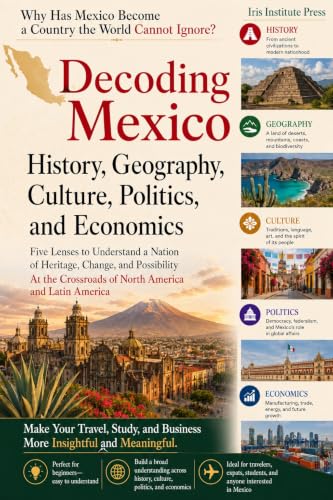
Decoding Mexico
History, Geography, Culture, Politics, and Economics — Five Lenses on the Real Mexico
From Aztec heritage to nearshoring: understand modern Mexico through five analytical lenses.
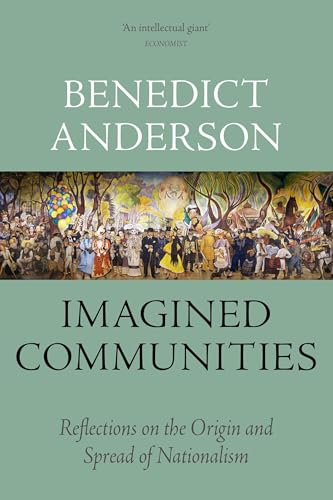
Imagined Communities: Reflections on the Origin and Spread of Nationalism
The foundational academic text on nationalism. Anderson's argument — that nations are 'imagined communities' constructed through print capitalism and shared historical narrative — has shaped every serious analysis of national identity and sovereignty for forty years.

Identity: The Demand for Dignity and the Politics of Resentment
Why has identity politics displaced economic anxiety as democracy's organizing force? Fukuyama traces the philosophical roots of the demand for recognition — from Plato's thymos to Hegel — and argues that liberal democracy must reclaim the politics of dignity before populism does.

Orientalism
One of the most influential books of the twentieth century. Said argues that Western academic and cultural representations of 'the East' are instruments of colonial power rather than neutral observation — a framework that reshaped how we think about knowledge, identity, and who gets to define whom.

The End of History and the Last Man
The most optimistic — and most contested — argument for liberal democratic identity as civilization's final form. Essential reading not because Fukuyama was right, but because understanding why he seemed right in 1992 and wrong by 2016 maps the political arc of our era.

The Clash of Civilizations and the Remaking of World Order
The direct counterargument to Fukuyama's universalism. Where Fukuyama saw convergence on a single liberal identity, Huntington saw irreducible civilizational difference — and predicted those differences would define 21st-century conflict. Still the unavoidable counterpoint.
As an Amazon Associate I earn from qualifying purchases.