Essential Books on U.S. Foreign Policy
American foreign policy since 1945 has shaped — and frequently destabilized — every region covered by the Iris library. These books examine it without illusions: the strategic interests, the covert operations, the unintended consequences, and the structural pressures that define how the world's most powerful state relates to everyone else.

Decoding Mexico
History, Geography, Culture, Politics, and Economics — Five Lenses on the Real Mexico
From Aztec heritage to nearshoring: understand modern Mexico through five analytical lenses.

Decoding Japan
History, Geography, Culture, Politics, and Economics — Five Lenses on the Indispensable Nation of Asia
Understand Japan through five lenses: history, geography, culture, politics and economics.
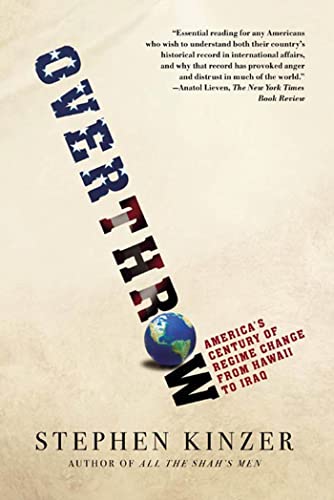
Overthrow: America's Century of Regime Change from Hawaii to Iraq
Stephen Kinzer documents fourteen U.S.-sponsored regime changes from 1893 to 2003 — Hawaii, Iran, Guatemala, Chile, Iraq. The pattern he finds is consistent: short-term strategic calculation, long-term blowback. The essential historical primer on American interventionism.
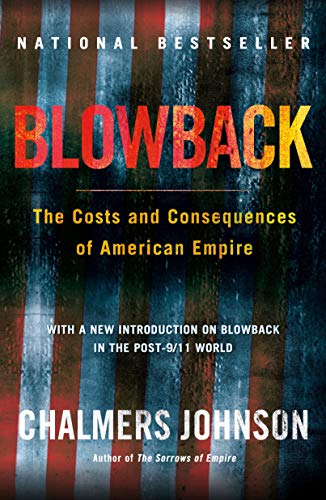
Blowback: The Costs and Consequences of American Empire
CIA analyst turned critic Chalmers Johnson coined the term that defined post-9/11 security debates: the unintended consequences of covert U.S. operations abroad returning home as violence. Written in 2000, its predictive accuracy made it required reading after the Twin Towers fell.

Destined for War: Can America and China Escape Thucydides's Trap?
Harvard's Graham Allison examines the 'Thucydides Trap' — the structural tendency for rising powers to clash with established ones. Of 16 historical case studies, 12 ended in war. The China-U.S. framework this book introduced is now standard in foreign policy analysis.

The Clash of Civilizations and the Remaking of World Order
The most argued-about foreign policy book of the past three decades. Huntington predicted post-Cold War conflict would be driven by civilizational identity rather than ideology — prescient in some ways, reductive in others, but the unavoidable reference point for any serious discussion of global order.
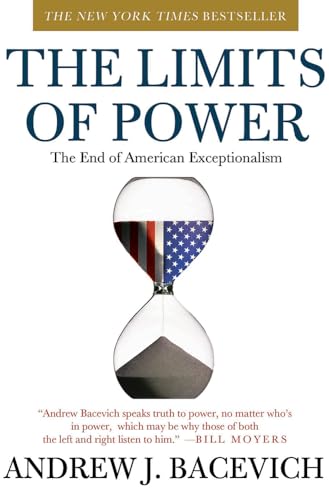
The Limits of Power: The End of American Exceptionalism
A conservative military historian and Vietnam veteran's indictment of American imperial overreach. Bacevich argues the crisis of U.S. foreign policy is rooted in domestic dysfunction — military, political, and economic — not external threats, and that only Americans can fix it.

Legacy of Ashes: The History of the CIA
National Book Award–winning history of the CIA from its 1947 founding through the Iraq War. Drawing on 50,000 declassified documents and hundreds of interviews, Weiner's account is a sustained institutional autopsy: lofty mission, chronic failure, enormous consequences.
As an Amazon Associate I earn from qualifying purchases.